
I Stop For Suffering
Our own suffering can be our best mindfulness bell

I had another moment yesterday. Similar to my last post, it was a moment of stopping and recognizing a feeling.
Yesterday, I was going about my day and getting lots of little things done. When I took a break from the to-do list (I think I might have just been filling up my water bottle), I noticed there was some underlying feeling of dissatisfaction or incompleteness. I wasn’t sad or angry, just a subtle undercurrent that said: “I’m glad to be doing all these things, but something is missing.”
As I’ve mentioned in previous posts, my habit is to let feelings like this pass by and keep on keeping on. But instead of brushing it off as usual, something in me paused. I was probably influenced by an inspiring newsletter from one of my favorite teachers I’d read earlier in the day*, and that newsletter must have been percolating in the back of my brain. I stopped and asked myself, “what’s causing this underlying dissatisfaction?”
An answer immediately came back: a feeling of not being enough. There were two parts of “not enoughness”: this moment wasn’t enough and I wasn’t enough. I’ve done quite a bit of work on my “not enough” beliefs in the past, so when I noticed this was happening, the bubble popped, I was able to chuckle at it, and a really lovely feeling washed over me. It was a feeling of warmth, gratitude, and a clear sense of enoughness for this moment, this day, and my life. I ended up going back to my to-do list, but with a very different energy. This time, I knew this was just what I was supposed to be doing at this moment. It was just right.
My big takeaway from this experience was that when I noticed my underlying dissatisfaction, I took a moment to ask, “what is this?”. When it became clear what was causing it, I had more choice around what to do about it. Its power came mostly from operating unnoticed in the background.
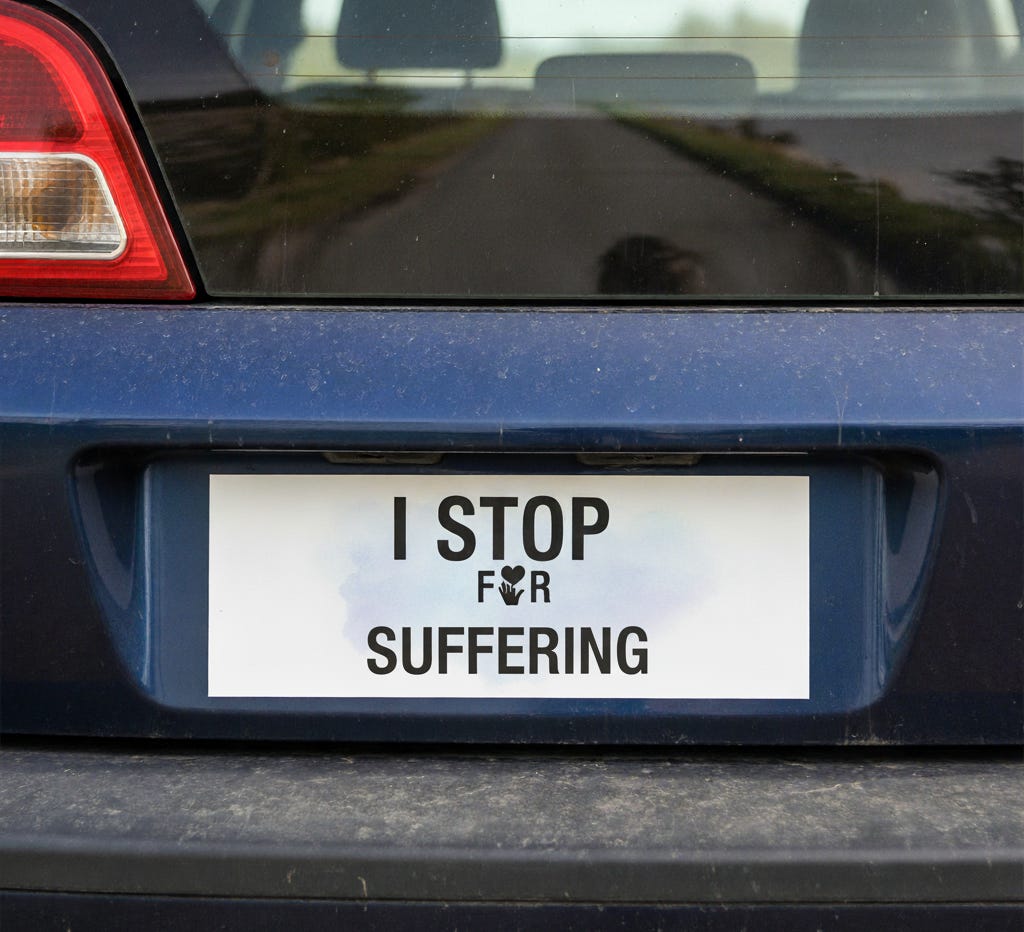
One of my favorite Buddhist teachers, Gil Fronsdal, sometimes says the Buddha’s bumper sticker would read: “I stop for suffering.” As in, we have to notice our suffering, look at it, and understand it. Our own suffering can become our best mindfulness bell.
I’ve talked about this experience of stopping and noticing our feelings in previous posts. I keep coming back to it because it feels so foundational for my growth and all I’ve learned about inner work. In other words, if I sound like a broken record, that’s on purpose :-)
Today, just once, pause when you feel dissatisfied. See what’s underneath. What happens? Write me back and let me know.
Love,
Brian
*message me if you want me to forward the post to you.